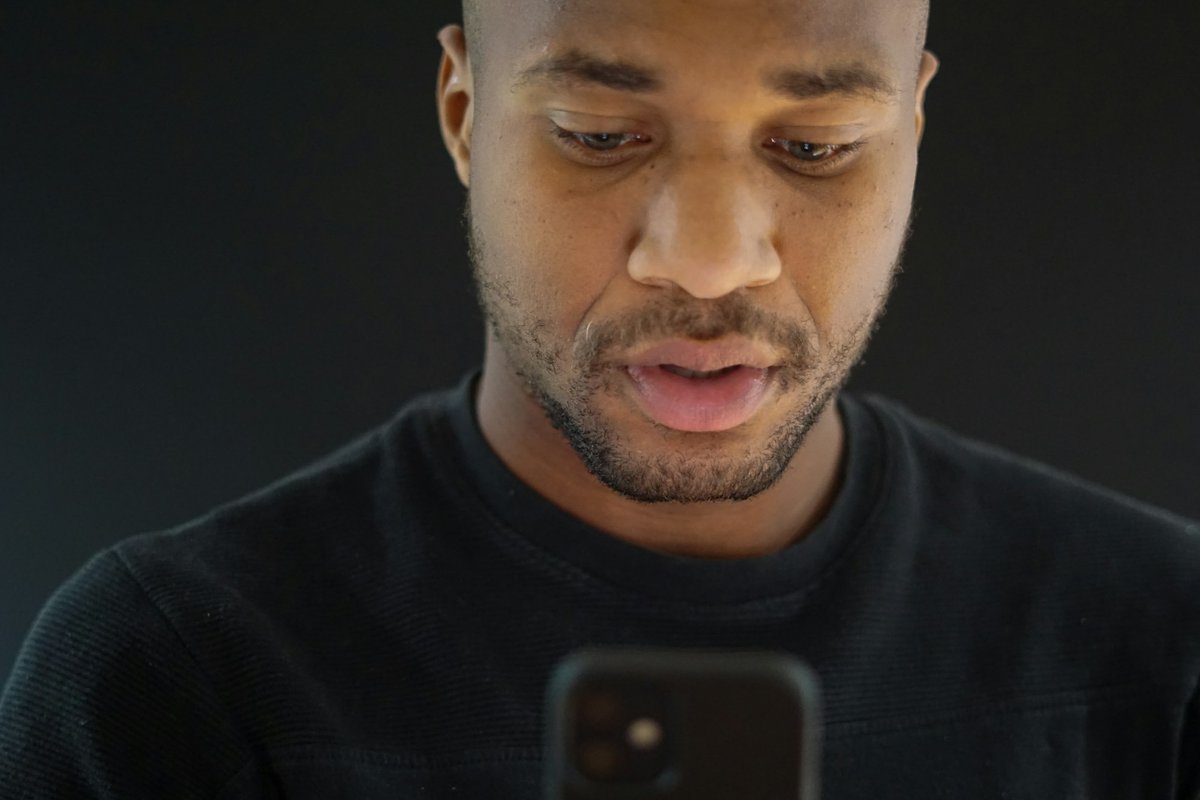
is your match actually texting you, or is it chatgpt?
inside "chatfishing," the ai dating trend nobody signed up for
You match with someone, they send a perfectly charming opener, the banter flows a little too smoothly, and three exchanges in you start to wonder: is this person actually funny, or did they just ask ChatGPT to be funny for them? Welcome to chatfishing, the dating app anxiety nobody asked for but a lot of people are apparently dealing with anyway.
wait, what is "chatfishing"?
Chatfishing isn't quite the same as catfishing. Catfishing means someone lies about who they are, wrong photos, fake job, fake name. Chatfishing is subtler: the person is real, the profile is real, but the words showing up in your inbox were partly or fully written by AI. Scientific American recently covered the trend, framing it as a kind of everyday Turing test playing out in millions of DMs, where you're not just chatting with a stranger, you're trying to guess how much of that stranger is actually typing.
And it's not a fringe habit. Match's 2025 Singles in America study, done with researchers at the Kinsey Institute, found that 26% of singles are now using AI to enhance their dating lives, a 333% jump from the year before. Dr. Amanda Gesselman, the study's lead, put it plainly: "AI isn't replacing intimacy, it's giving singles an edge. For a generation overwhelmed by options, tools that bring clarity and efficiency are more than welcome." The same study found 44% of singles want AI to help filter their matches, and 40% want help writing a better profile.
Then there are the apps built entirely around this idea, the "wingman" apps that read your matches' messages and hand you a reply. Rizz alone has reportedly hit 1.5 million monthly active users, per a Time report cited by Scientific American. Some dating apps have started building the feature in directly, with both Hinge and Facebook Dating experimenting with AI-assisted messaging.
So somewhere out there, right now, someone is looking at your message thread and letting a language model draft their reply. Maybe more than one someone.
meet the apps doing the flirting for you
If you want to know exactly who's ghostwriting your match's next message, here are a few of the bigger names:
- Rizz bills itself as "the most trusted AI wingman on iOS," which is a strange thing to put on a resume. Screenshot your conversation, it hands back a reply, and somewhere a very online teenager never has to type "hey what's up" from scratch again.
- Winggg says its team spent over 1,000 hours fine-tuning the AI to sound convincingly human. That's more effort than most people put into their actual wedding vows.
- YourMove AI claims 300,000-plus people now let it write their openers, fix their profile, and run point on their love life. At that point it's less a wingman and more a very committed ghostwriter who also has your login.
If a message reads like it came from someone with a marketing degree and infinite patience, there's a decent chance it did. It just wasn't the human kind of marketing degree.
the numbers are wild
Here's where it gets uncomfortable. Norton's 2025 dating report found that 60% of current online daters believe they've already had a conversation on a dating app that was written by AI. That's not a fringe suspicion, that's six out of every ten people you've matched with, statistically speaking.
It gets worse when you look at what people can actually detect versus what they think they can detect. The same Norton report found only 46% of users could correctly identify a fake or AI-generated photo when tested, which is basically a coin flip. And 27% of dating app users said they'd found their own real photos being used on a profile that wasn't theirs.
None of this exists in a vacuum. Norton also found that 40% of current dating app users have been targeted by a scam, and 41% of those targeted actually fell for it. The most common scam type people ran into was, unsurprisingly, catfishing, at 55%, followed by romance scams and sugar daddy or sugar baby scams. US platforms blocked 64% more scam attempts last year than the year before, which is either reassuring (they're catching more) or alarming (there's a lot more to catch), depending how you look at it.
Put it together and the picture is pretty stark: a huge chunk of daters suspect they've talked to a bot or an AI-assisted human, most people can't reliably prove it either way, and scammers are leaning into exactly that confusion.
can you actually tell if you're talking to a bot?
Short answer: probably not as well as you think. A 2025 study out of UC San Diego by researchers Cameron Jones and Benjamin Bergen ran a real Turing test: 284 participants had five-minute text conversations with two partners at once, one human and one AI, then had to guess which was which.
When GPT-4.5 was given a specific persona prompt to play, it was judged to be the human 73% of the time, meaning it beat the actual human at seeming human. LLaMA-3.1-405B managed 56%. Strip away the persona prompting and the numbers drop fast, GPT-4.5 fell to 36%, showing that a lot of what makes AI convincing in conversation is deliberate prompting, not some unstoppable emergent ability.
That's a meaningful detail for dating apps specifically, because a persona prompt is exactly what a wingman app is doing. It's not raw ChatGPT typing "as an AI language model," it's a model instructed to sound like a specific charming, slightly self-deprecating 28-year-old who loves hiking and hates small talk. That's the version built to pass, and per the UCSD data, it's disturbingly good at it.
None of this means every witty text you get is AI. Plenty of genuinely funny, thoughtful people exist and are typing their own messages right now. But the old tells, perfect grammar, quick wit, zero typos, aren't reliable signals anymore. If anything they're becoming weaker evidence of a real person, not stronger.
how to actually spot it (probably)
Nobody's handing out a foolproof AI detector, but a few patterns are worth watching for:
- A reply that's suspiciously fast and suspiciously polished. A real person juggling a phone, a job, and a life takes a beat and makes small mistakes. A copy-pasted AI reply lands quickly and reads like it was edited by a very calm robot, because it was.
- Generic follow-up questions. "What do you like to do for fun?" is a lot more common from AI than a reply that reacts to something specific you actually said.
- A weird plateau in personality. Real conversations wander, get weird, reference inside jokes. Chatfished conversations can feel stuck on one setting: charming, upbeat, and a little flat.
- A vibe shift the moment you get on a call or meet up. This is the most reliable tell of all. If the texting personality doesn't match the person on the phone, that's the giveaway, not anything in the writing itself.
The writing sample just isn't proof of much anymore. A live, unscripted moment still is.
why this matters beyond "is my crush a robot"
There's a bigger trust problem forming underneath the jokes. When a huge share of daters can't tell if a message was human-written, every good message becomes slightly suspect, and every red flag becomes harder to separate from a scam script. That's exhausting in a category that's already built on strangers making snap judgments about each other.
It also changes what a "good opener" even signals. For years, dating advice was built around crafting the perfect first message, the clever line, the specific reference to something in their bio. If that message might be AI-assisted, the message itself stops being useful evidence of compatibility. A witty text used to say something about the person. Now it might just say something about which app they downloaded.
where does polar's ai actually show up?
Polar does use AI, just not for the part everyone's suddenly nervous about. The recommendation engine behind your matches learns from how you react to cards, the opinions, values, and dealbreakers you actually care about, and uses that to figure out who you're likely to click with. That's the whole job it has.
Once you're matched, the AI clocks out. There's no suggested reply, no auto-generated opener sitting in your keyboard, no model quietly cleaning up your grammar before you hit send. Whatever shows up in the chat is whatever the person actually typed, typos and all.
where polar fits into this
This is basically the problem Polar was built to sidestep. Instead of judging someone off a string of messages that could've been written by anyone, or anything, Polar starts with cards: real opinions on real topics, the stuff that's much harder to fake convincingly and much more revealing than a smooth opener ever was. You see how someone actually thinks before you're relying on their texting game to figure out who they are.
If the idea of matching on substance, with a real person on the other end of the chat, sounds better than another round of "is this person even into hiking," download Polar on iOS or Android and see for yourself.
keep reading
everyone says dating apps are dead. the receipts say otherwise
the burnout posts are real. so is the wedding data. here's both
september 18, 2026

do opposites really attract?
what a massive study of real couples says about the old dating cliché
august 19, 2026

polar 2.0 is here
a global launch, polar plus, and new ways to match
august 1, 2026